
Few kitchen questions are as practical as this one: is this egg still fresh?
We ask it before poaching, before baking, before breakfast and, occasionally, while holding a carton we should probably have checked earlier. The useful thing about eggs is that they change in fairly predictable ways as they age. The more you understand those changes, the less guesswork you need.
Freshness is not just a number on a box. It is a set of physical changes happening inside the shell.
The short answer
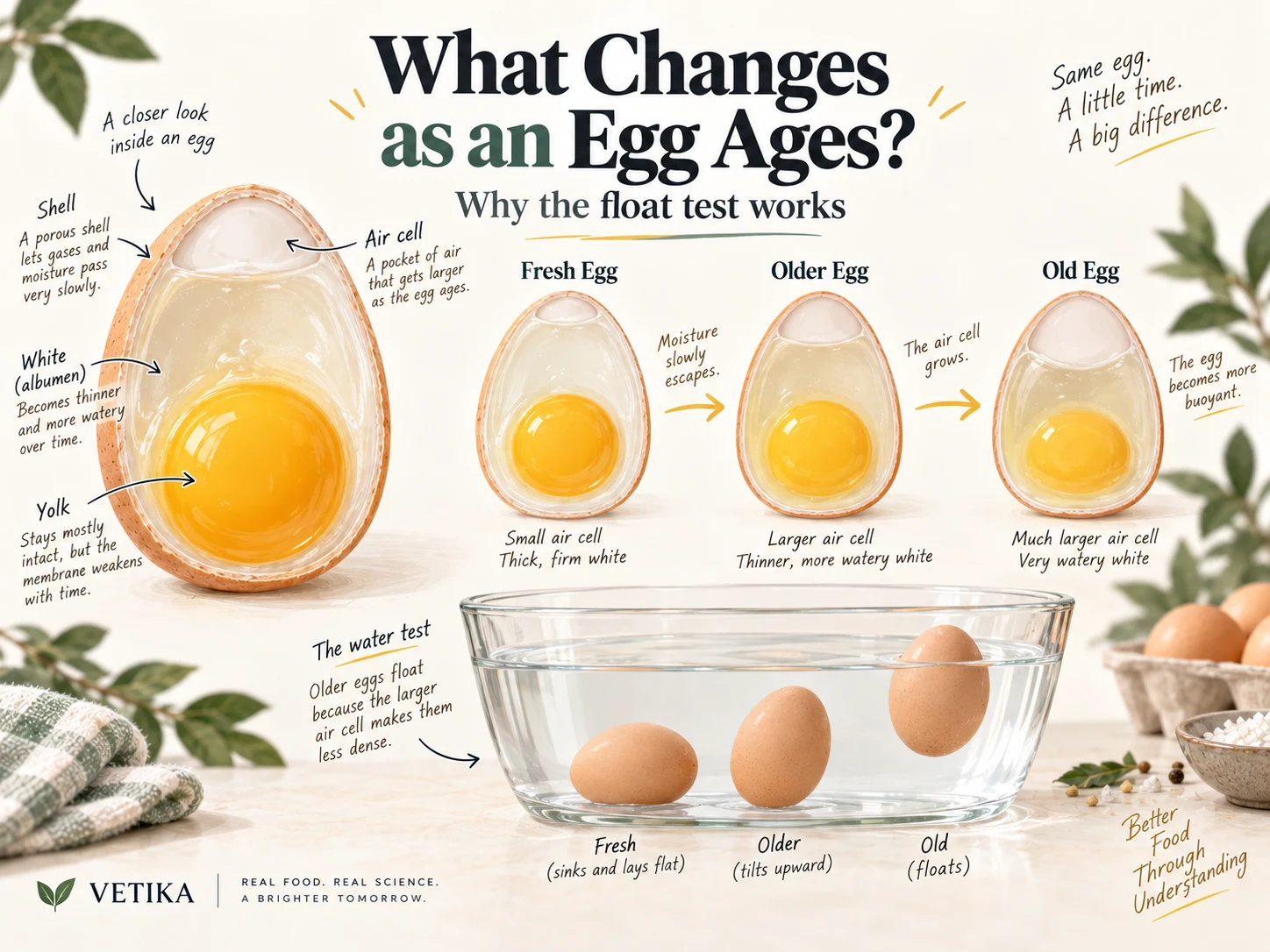
A fresh egg usually sinks and lies flat in water, has a small air cell, a firmer white and a yolk that sits up neatly. As the egg ages, moisture and gases slowly move through the shell, the air cell becomes larger, the white becomes thinner and the egg becomes more buoyant.
That is why the float test works.
Why an egg changes over time
Eggshells look solid, but they are porous. Over time, tiny amounts of moisture and gases move through the shell. As that happens, the pocket of air at the wider end of the egg—the air cell—gets larger. At the same time, the white becomes looser and more watery, while the yolk membrane gradually weakens.
These changes do not instantly make the egg unsafe. They do, however, change the way it behaves in water and the way it performs in cooking.
The float test: what it tells you
Place the egg in a bowl of water and watch what it does.
- Fresh egg: sinks and lies flat on the bottom.
- Older egg: sinks but tilts upward.
- Old egg: stands upright or floats.
The logic is simple. As the air cell grows, the overall density of the egg decreases. Once enough buoyancy develops, the egg rises.
The float test is therefore a freshness test, not a perfect safety test. A floating egg is old. It may still or may not still be usable, depending on storage conditions and smell once opened, but it is certainly no longer very fresh.
Why the float test works
The larger air cell is the star of the story. Each day, a little moisture is lost and the internal space changes. That extra pocket of air makes the egg more buoyant, so it sits more upright and eventually floats.
Once you understand that, the test stops feeling like folklore and starts feeling beautifully logical.
The crack-it-open test
Water is not your only clue. Crack the egg onto a plate and look at its shape.
A fresher egg tends to have:
- a yolk that sits high and rounded;
- a white that stays relatively compact;
- clear separation between the thicker and thinner parts of the white.
An older egg tends to have:
- a flatter yolk;
- a white that spreads more widely;
- a generally looser appearance.
Again, the reason is structural. The proteins and membranes inside the egg do not remain unchanged forever.
Why freshness matters in cooking
Not every recipe demands the freshest egg possible, but some do.
Poached eggs benefit from a firmer white because it holds together better in the water. Fried and soft-cooked eggs also look tidier when the yolk sits high. For baking, slightly older eggs may often be perfectly fine. In some cases, older eggs are even easier to peel after hard-boiling.
So the question is not only “is it edible?” but also “is it the best egg for the job?”
Does a floating egg always mean it is bad?
Not automatically, but it does mean it is old enough to deserve caution. If the egg floats, crack it into a separate bowl. Smell it. Look at it. If it smells unpleasant or looks obviously wrong, discard it. If it seems normal, you still need to remember that you are dealing with an older egg rather than a fresh one.
For editorial clarity, it helps to say this plainly in the article and avoid presenting the float test as a perfect yes-or-no verdict.
Other signs of age
You may notice additional clues when handling older eggs:
- the white runs more quickly;
- the yolk breaks more easily;
- the egg may feel less ideal for poaching or presentation;
- the shell may not reveal much at all until the egg is opened.
Freshness, in other words, is mostly an inside story.
A useful connection: foam and emulsions
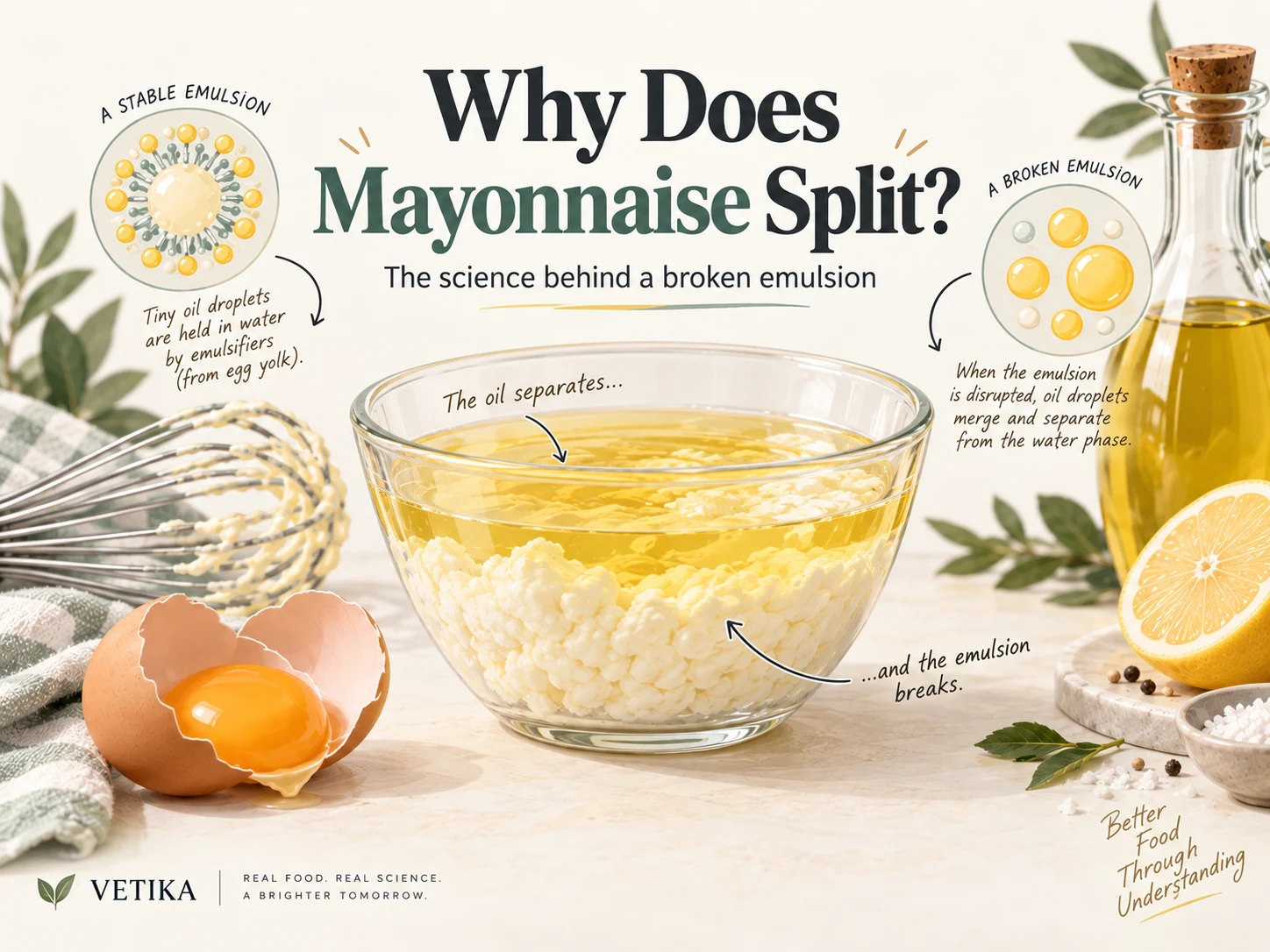
Eggs are wonderfully versatile because different parts do radically different jobs. The yolk helps create emulsions such as mayonnaise. The white helps create foams. That makes Why Does Mayonnaise Split? and Why Do Egg Whites Turn Into Foam? ideal internal links from this article.
A reader interested in egg freshness is often the kind of reader who will happily keep learning about what eggs do in the kitchen.
Kitchen takeaways
If you want a practical rule of thumb:
- use the float test when you need a quick check;
- crack the egg open for a closer look when in doubt;
- save your freshest eggs for poaching or neat presentation;
- remember that older is not the same as automatically unsafe, but older does call for more judgement.
The best part is that the behaviour of the egg is not random. It reflects a series of real, understandable changes in density, structure and moisture.
FAQs
Why do old eggs float?
Because the air cell inside the shell gets larger over time, reducing the egg’s overall density and making it more buoyant.
Is the float test reliable?
It is reliable as a freshness indicator. It tells you how old the egg behaves, not everything about safety.
What does a fresh egg look like when cracked open?
It usually has a higher, rounder yolk and a white that stays relatively compact instead of spreading thinly across the plate.
Are older eggs useless?
Not at all. They may simply be less ideal for some tasks, such as poaching, while remaining fine for many baking and cooking jobs.
Are fresh eggs or older eggs easier to peel after boiling?
Slightly older eggs are often easier to peel, which is one reason “not perfectly fresh” is not always a disadvantage.
What article should this link to next?
The strongest next click is Why Do Egg Whites Turn Into Foam?, because it continues the story of what egg structure means in real cooking.